Community Projects
Ga’walap̓a laxa̱n’s ḵa̱n’s sa̱nale’ Healing Camp
Help Us to Be Whole: Community-Led Healing for First Nations Wellness Providers
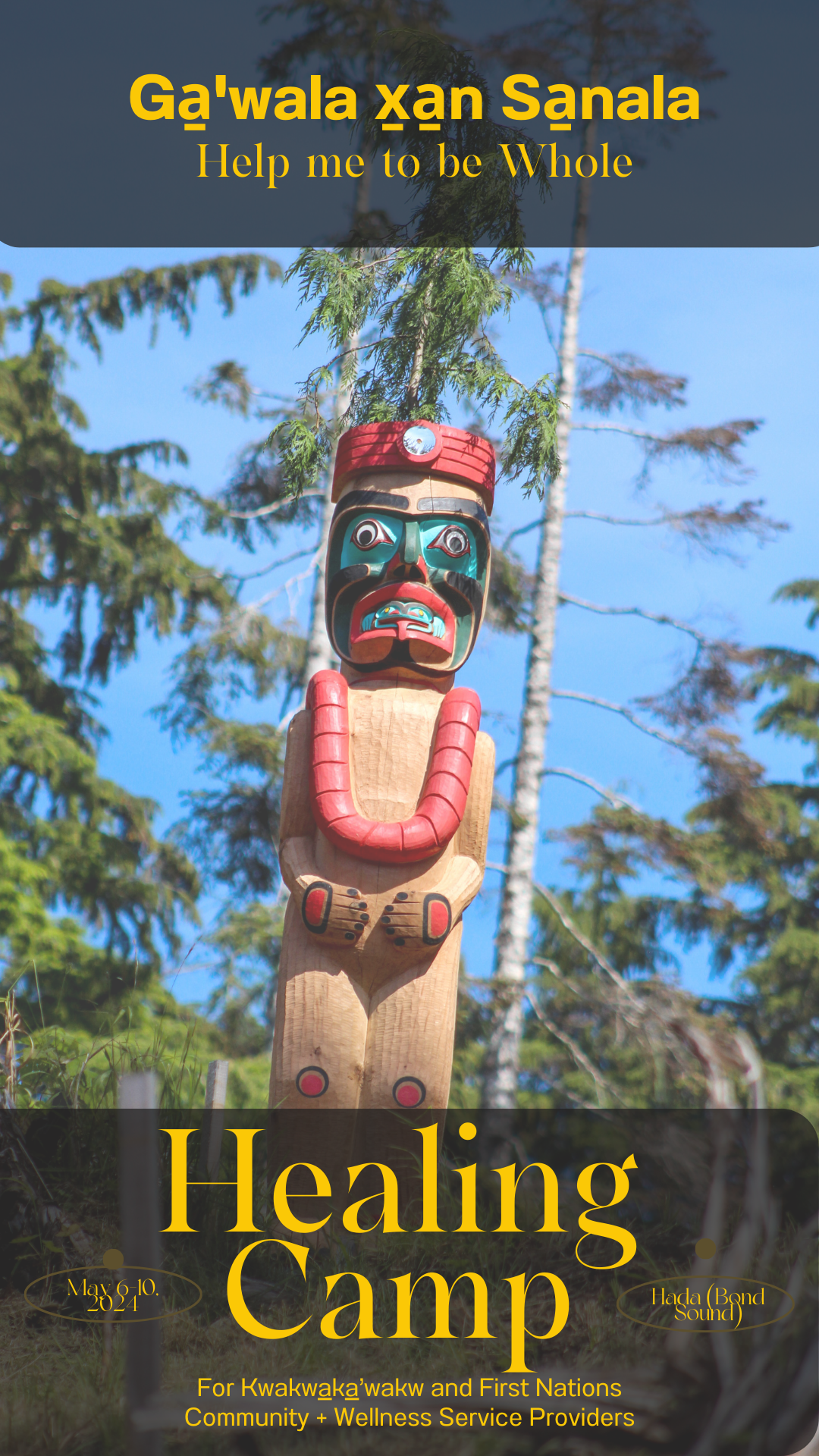
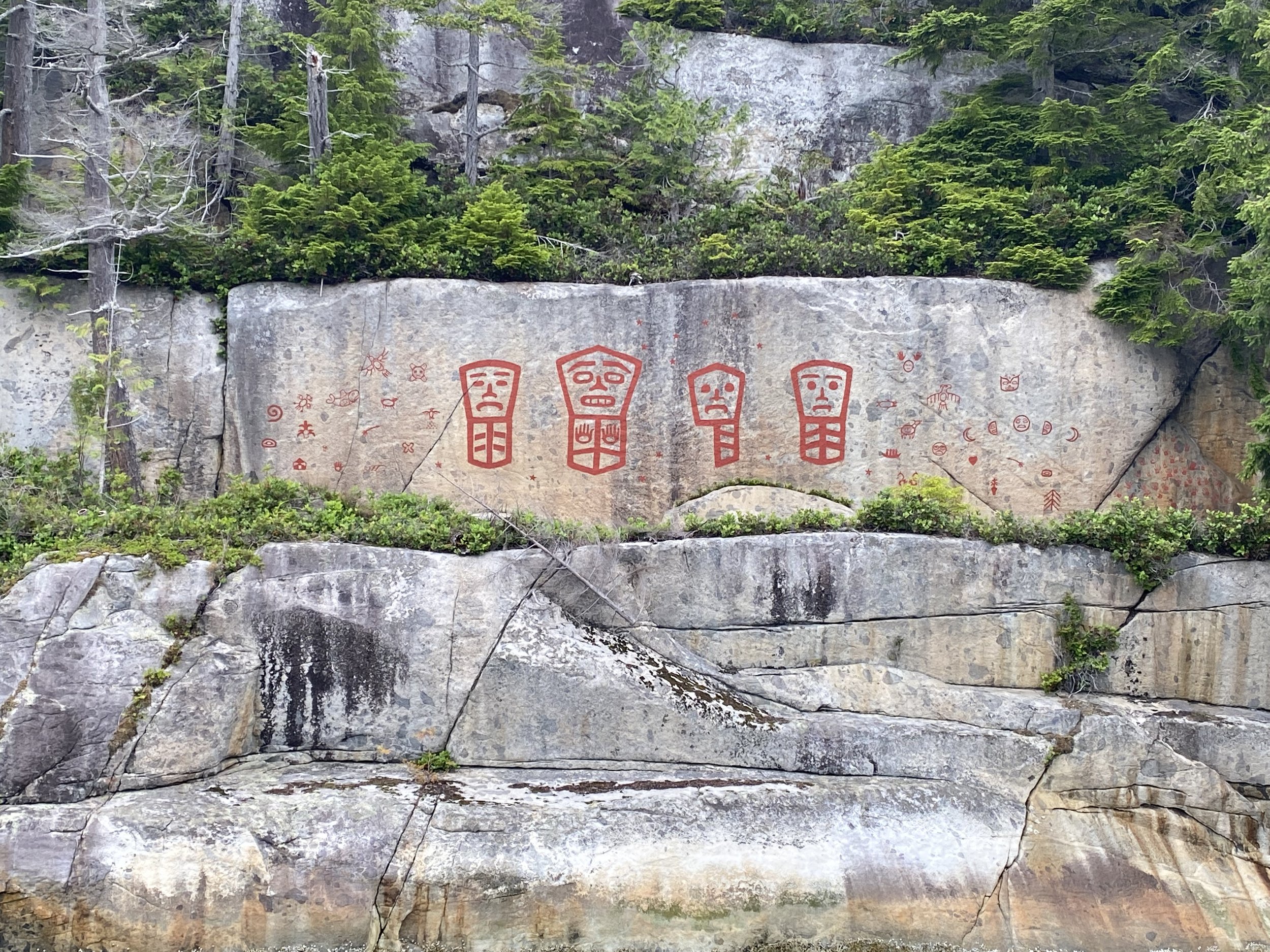
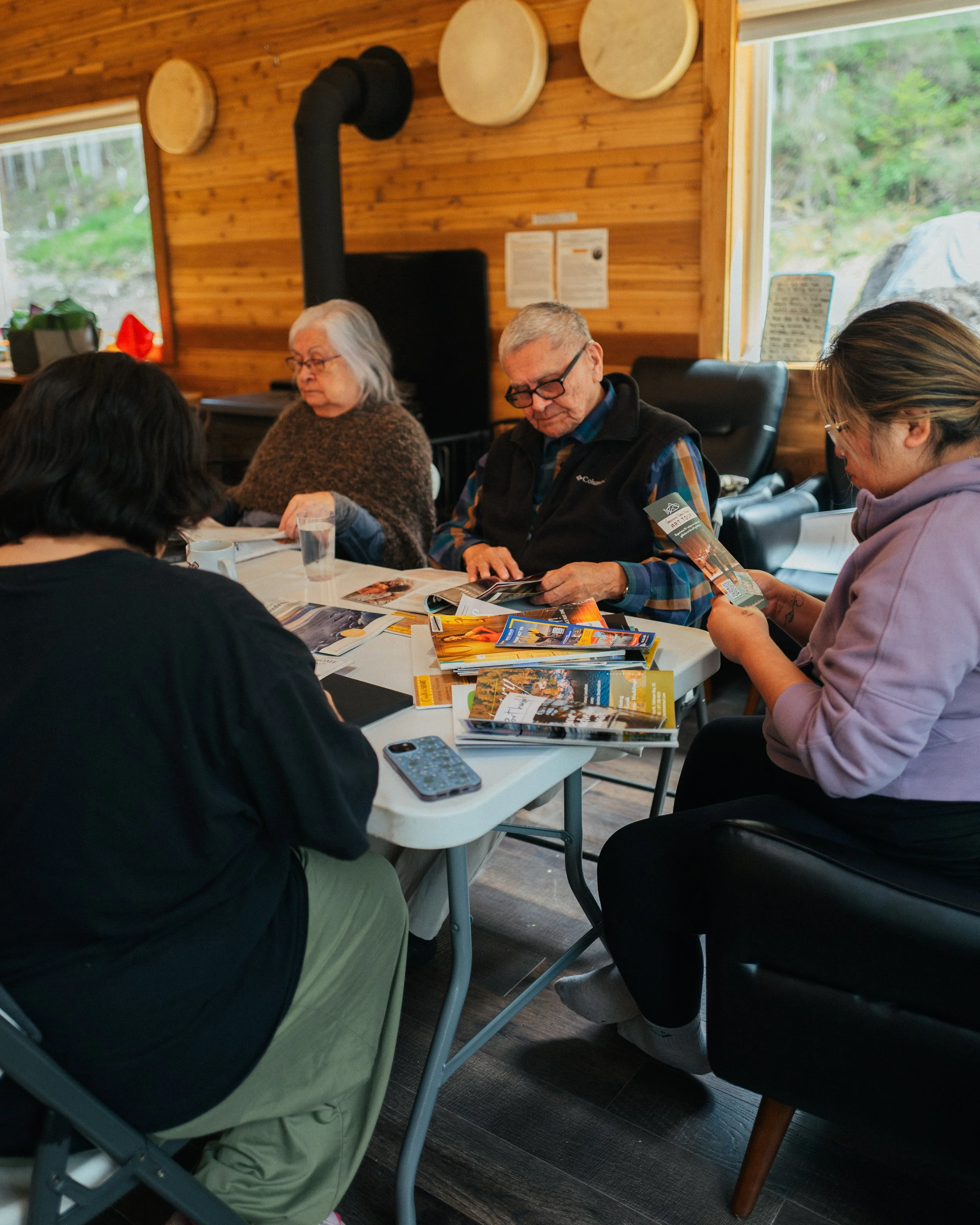
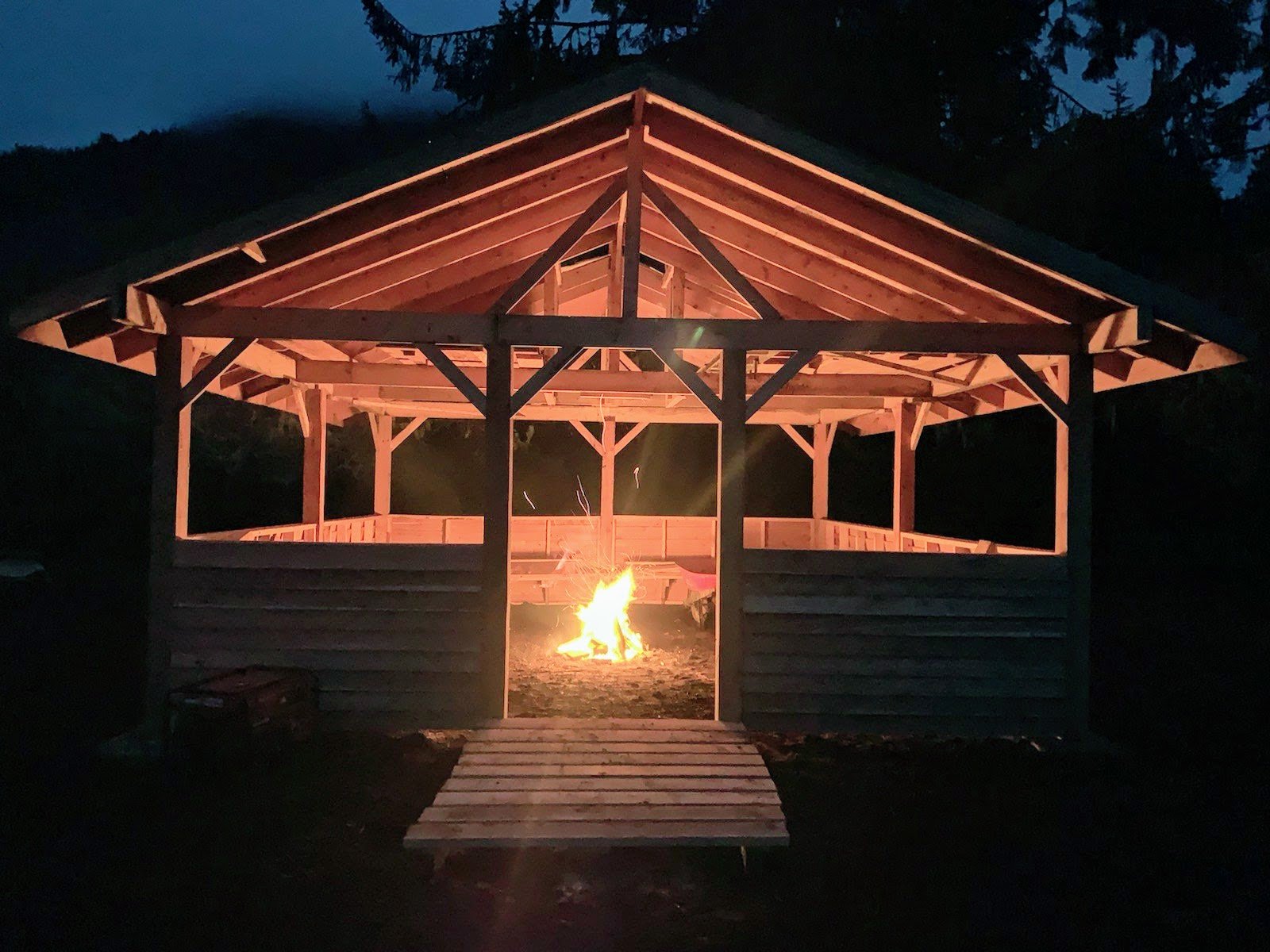
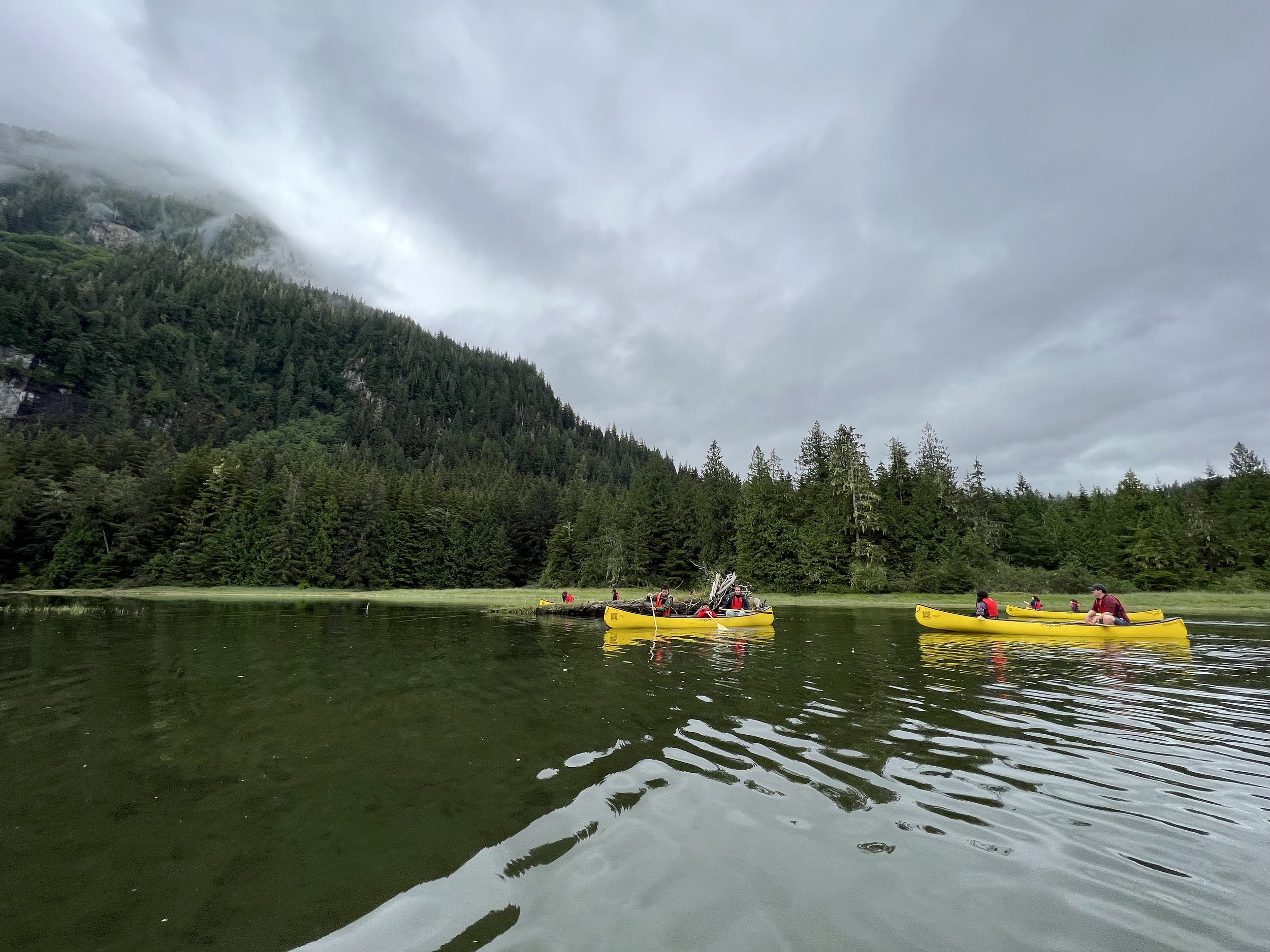
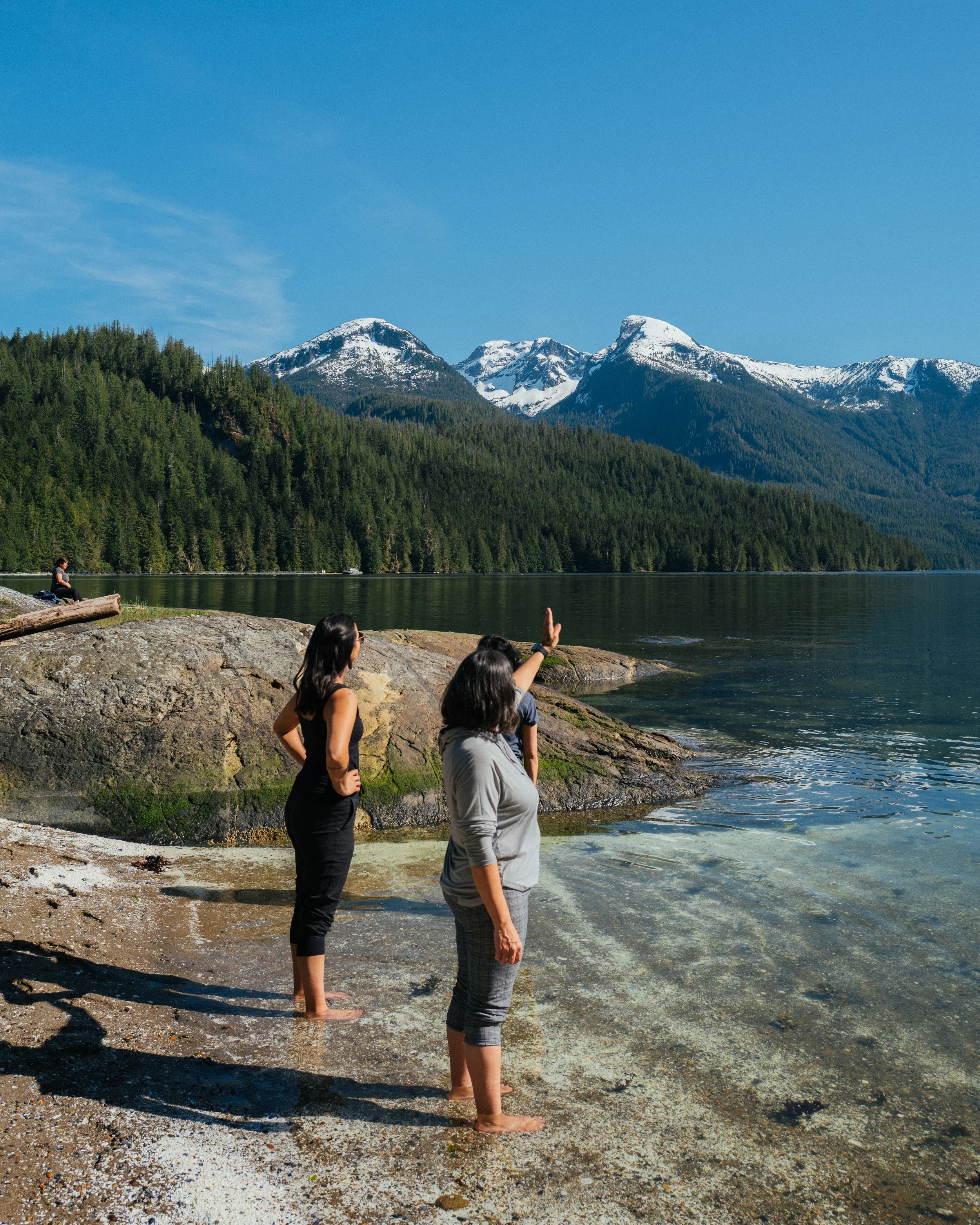
Ga’walap̓a laxa̱n’s ḵa̱n’s sa̱nale’: Help Us to Be Whole Healing Program is a community-led, trauma-informed healing camp and film project that was created with and for First Nations frontline and community wellness workers on Northern Vancouver Island. Co-led by me (Jessica Barudin) and Stephanie Bernard, in partnership with Nawalakw and North Island Building Blocks to support the wellness and healing of our North Island First Nations community and wellness service providers. Our gathering was hosted on the lands of the Ḵwiḵws̱sut’inux̱w Ha̱xwa’mis at Hi'ma̱nis ḵaḵ̓ut̓ła̱'atsi “A place for forever learning” in Hada (Bond Sound) last May 2024.
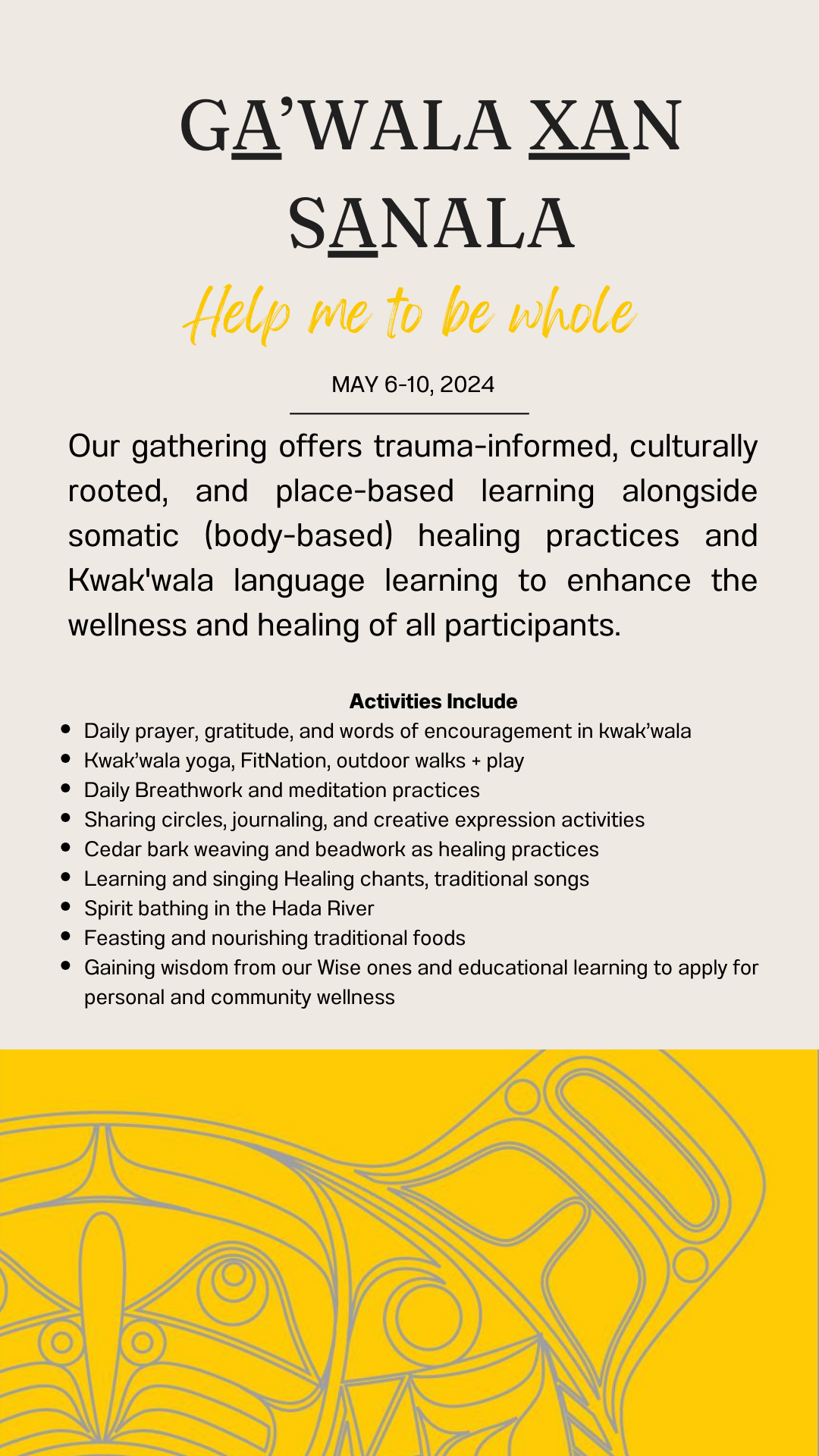
Our gathering offered trauma-informed, culturally rooted, and place-based learning alongside somatic (body-based) healing practices and Kwak'wala language learning to enhance the wellness and healing of all participants. Nawalakw prioritizes the goal of language revitalization, increasing language learning opportunities toward. Our shared goal was to provide land-based activities, interactions between Elders and learners, opportunities to listen to and use language in conversation and ceremony, and a place where our people can explore the language, culture, and healing in a joyful and serene environment.
Why This Work Matters
Frontline and community wellness providers carry immense emotional, spiritual, and relational load. Many are:
Supporting families through grief, loss, and addiction
Holding stories of residential schools and ongoing colonial harm
Navigating burnout, compassion fatigue, and vicarious trauma
Ga’walap̓a laxa̱n’s ḵa̱n’s sa̱nale’ was created to answer a core question:
How can a culturally rooted, land-based, trauma-informed camp support the wellness of First Nations community service providers?
Instead of asking our helpers to “push through,” this model offers time, space, and community to slow down, be held, and begin or deepen their own healing journeys.
About the Healing Camp in Hada
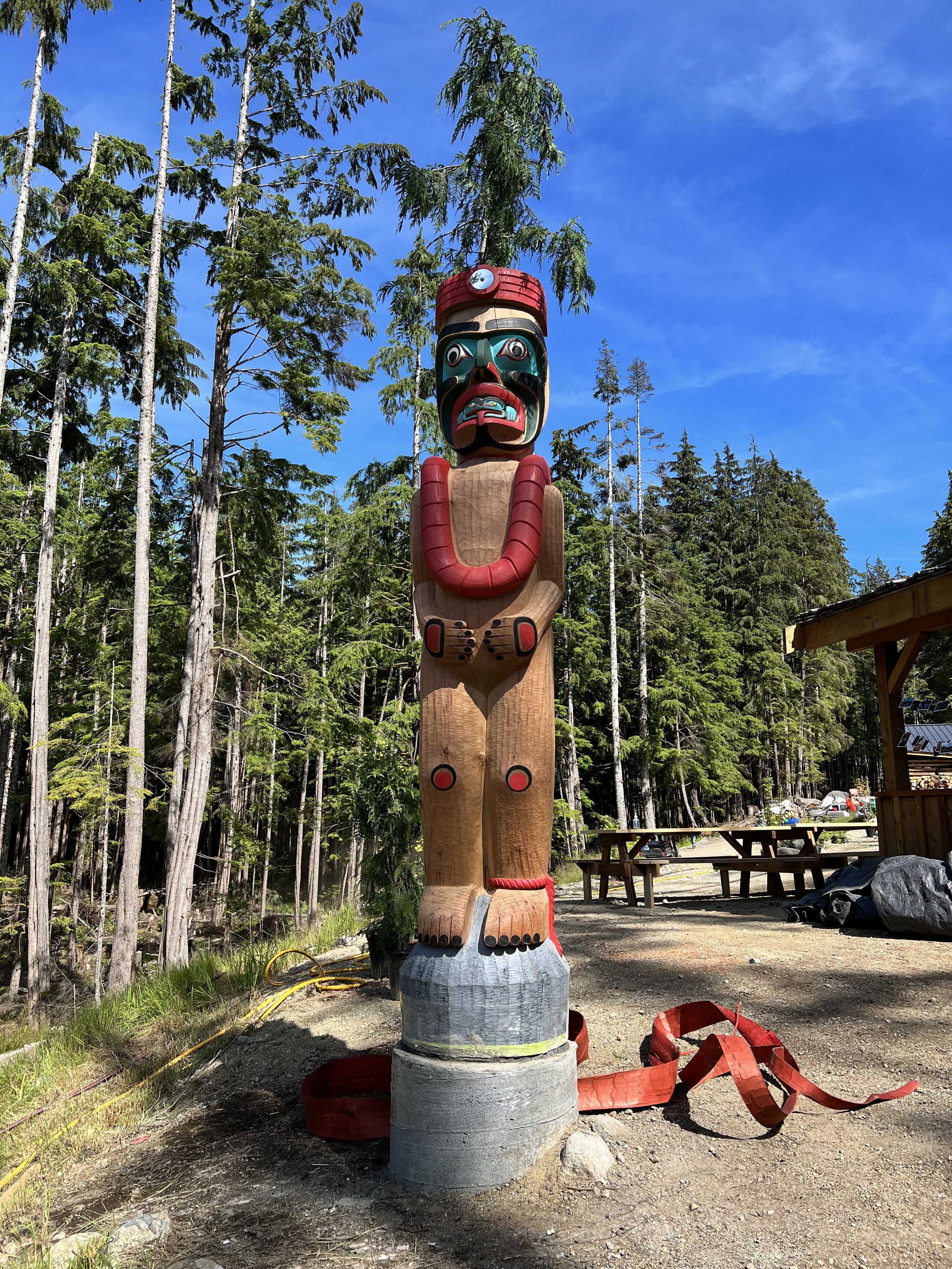
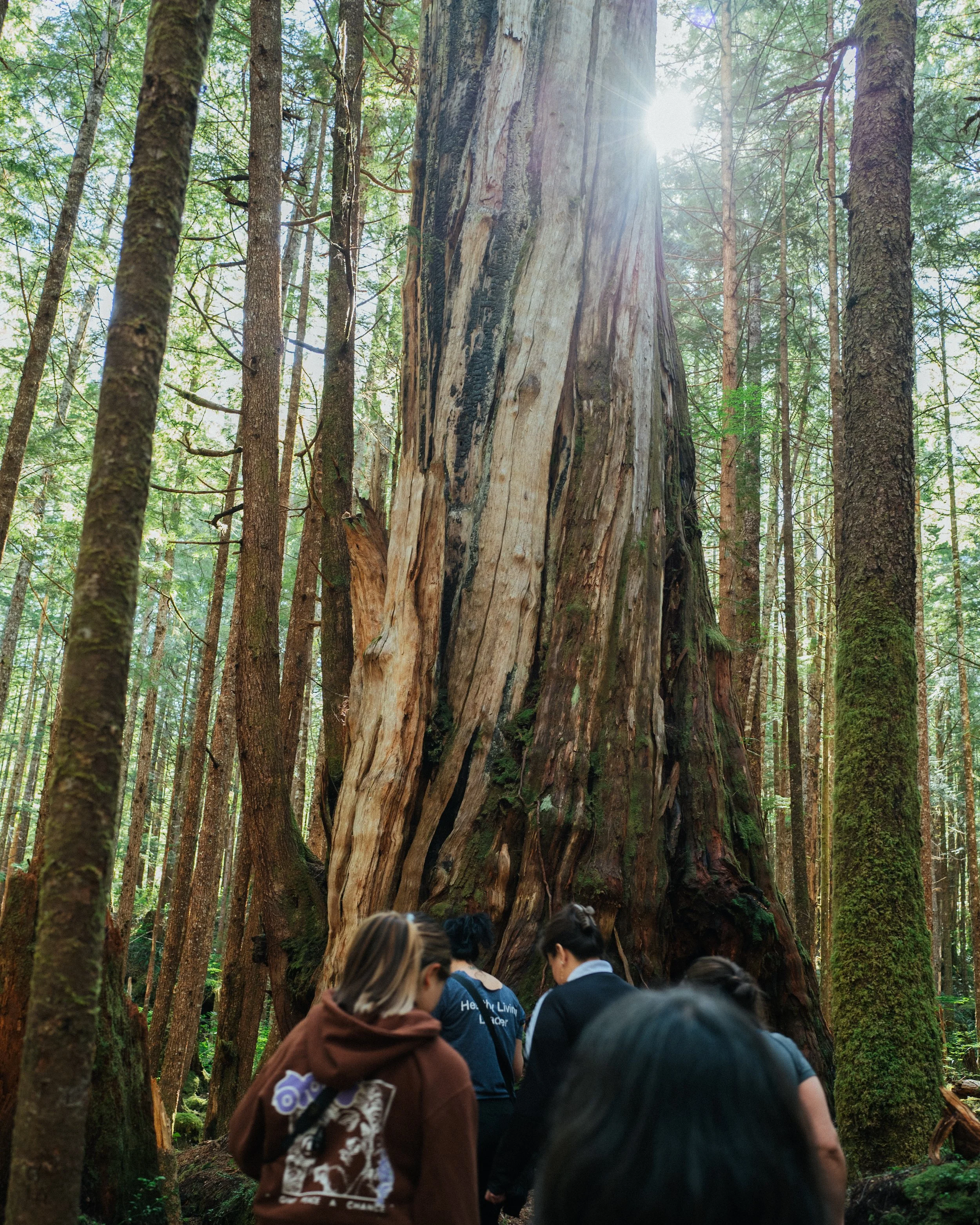
The pilot camp took place at Nawalakw Language & Culture Camp, hi'ma̱nis ḵ̓aḵ̓ut̓ła̱'at̓si (“a place of forever learning”) in Hada (Bond Sound), on the traditional and unceded territory of the Ḵwiḵwa̱sut̓inux̱w, one of the four tribes of the Musǥa̱makw Dzawada̱’enux̱w.
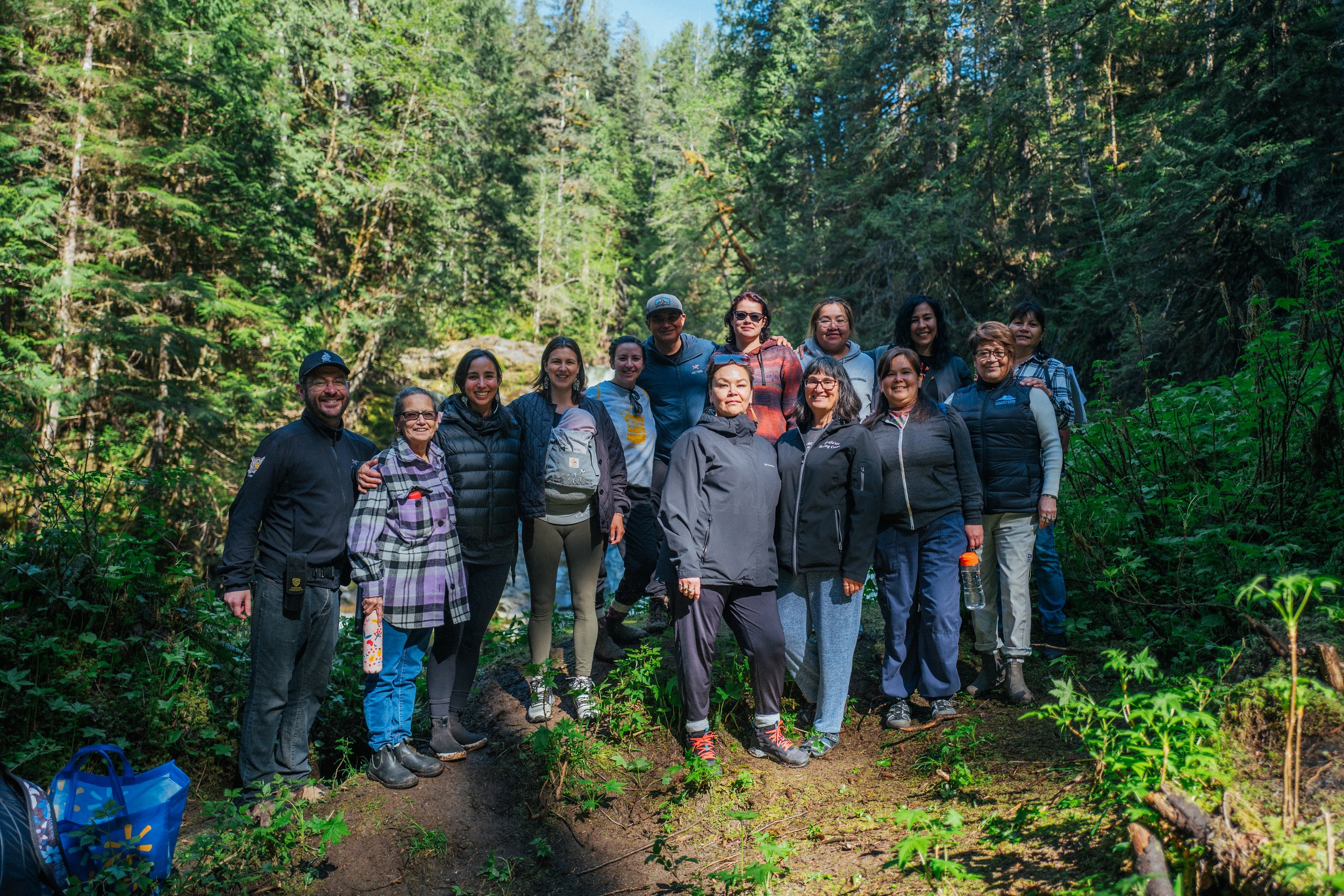
Over several days, 14 participants from Kwakwaka’wakw communities gathered to immerse themselves in:
Kwak̓wala language learning woven into daily life, song, and movement
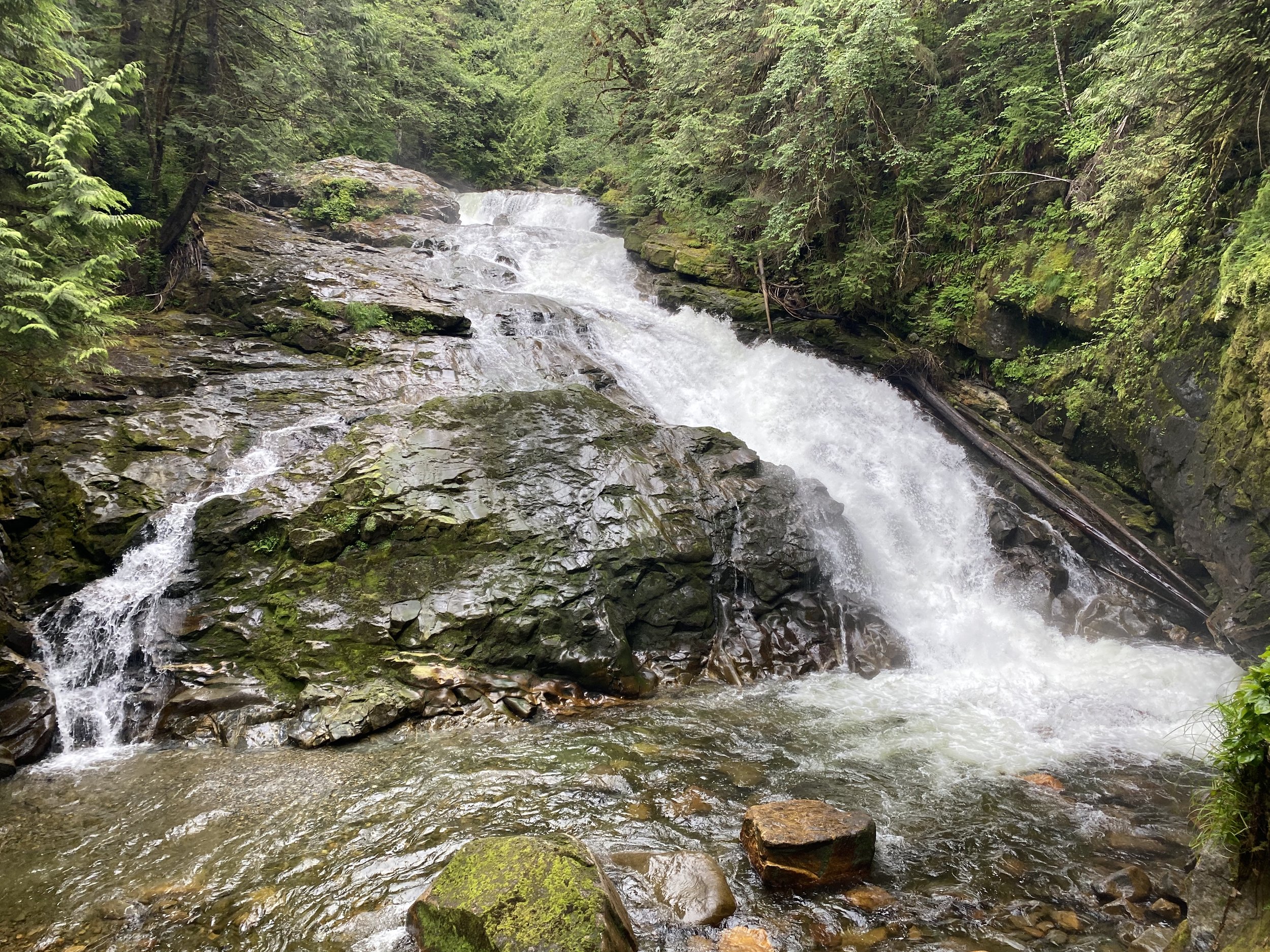
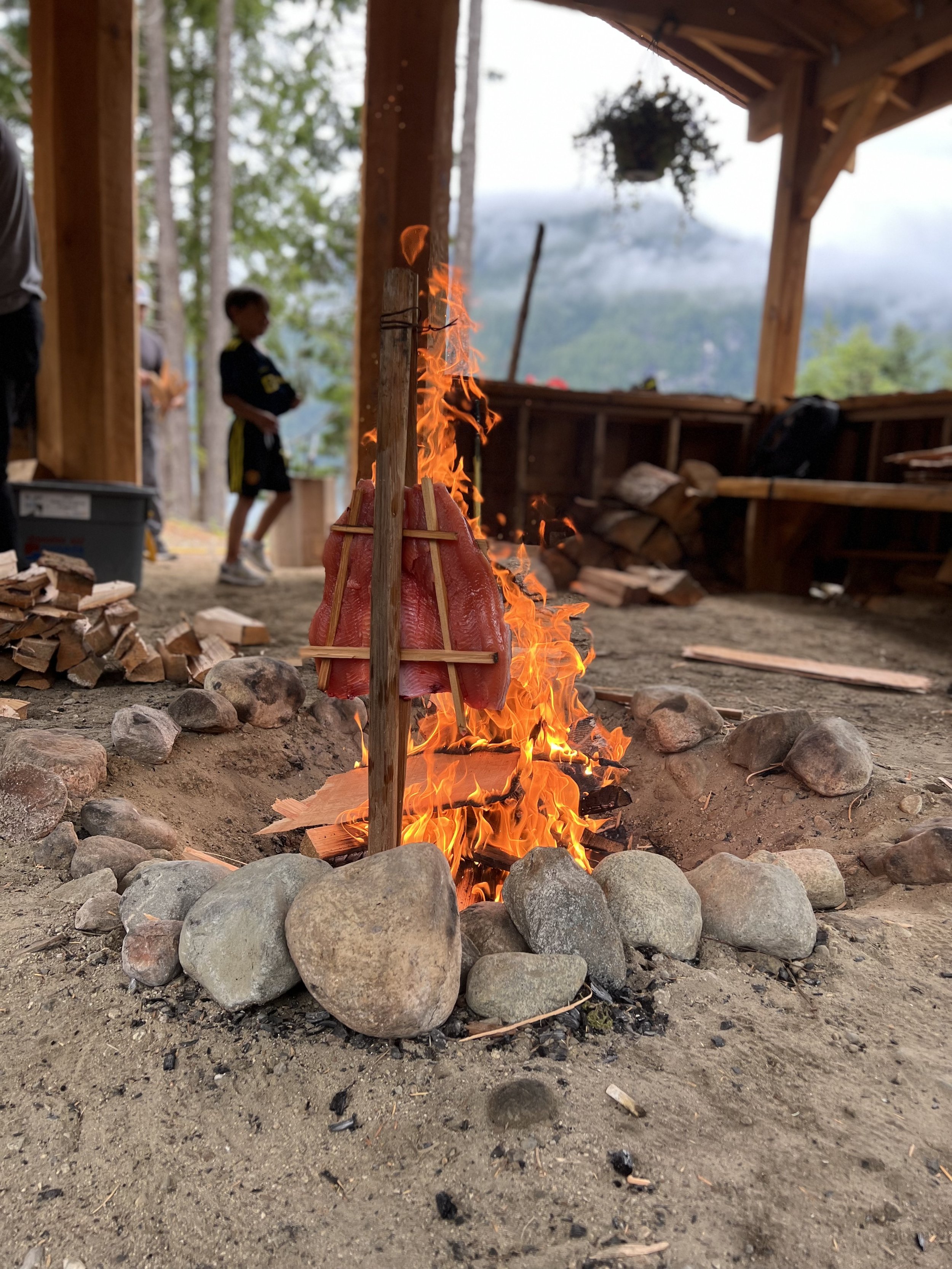
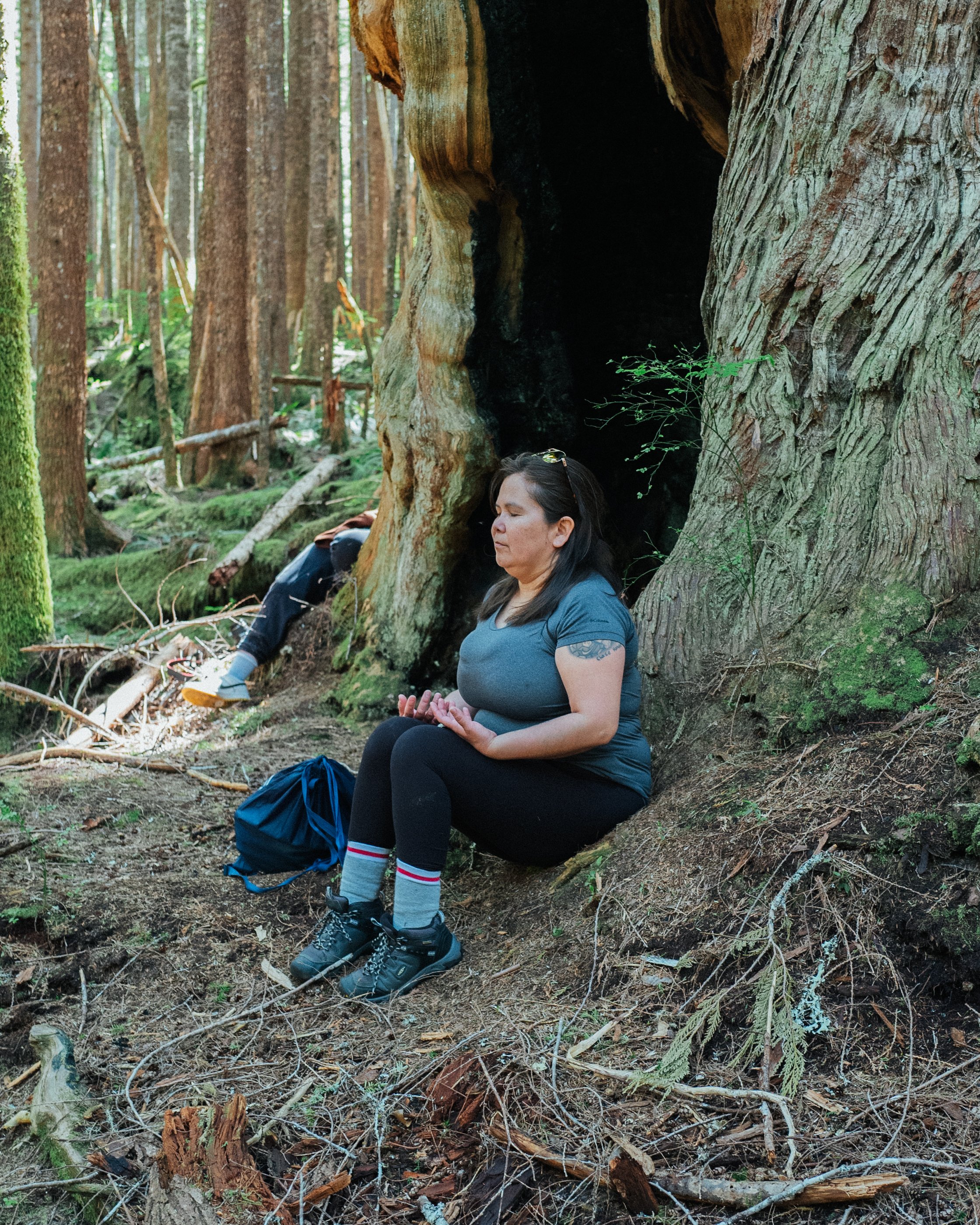
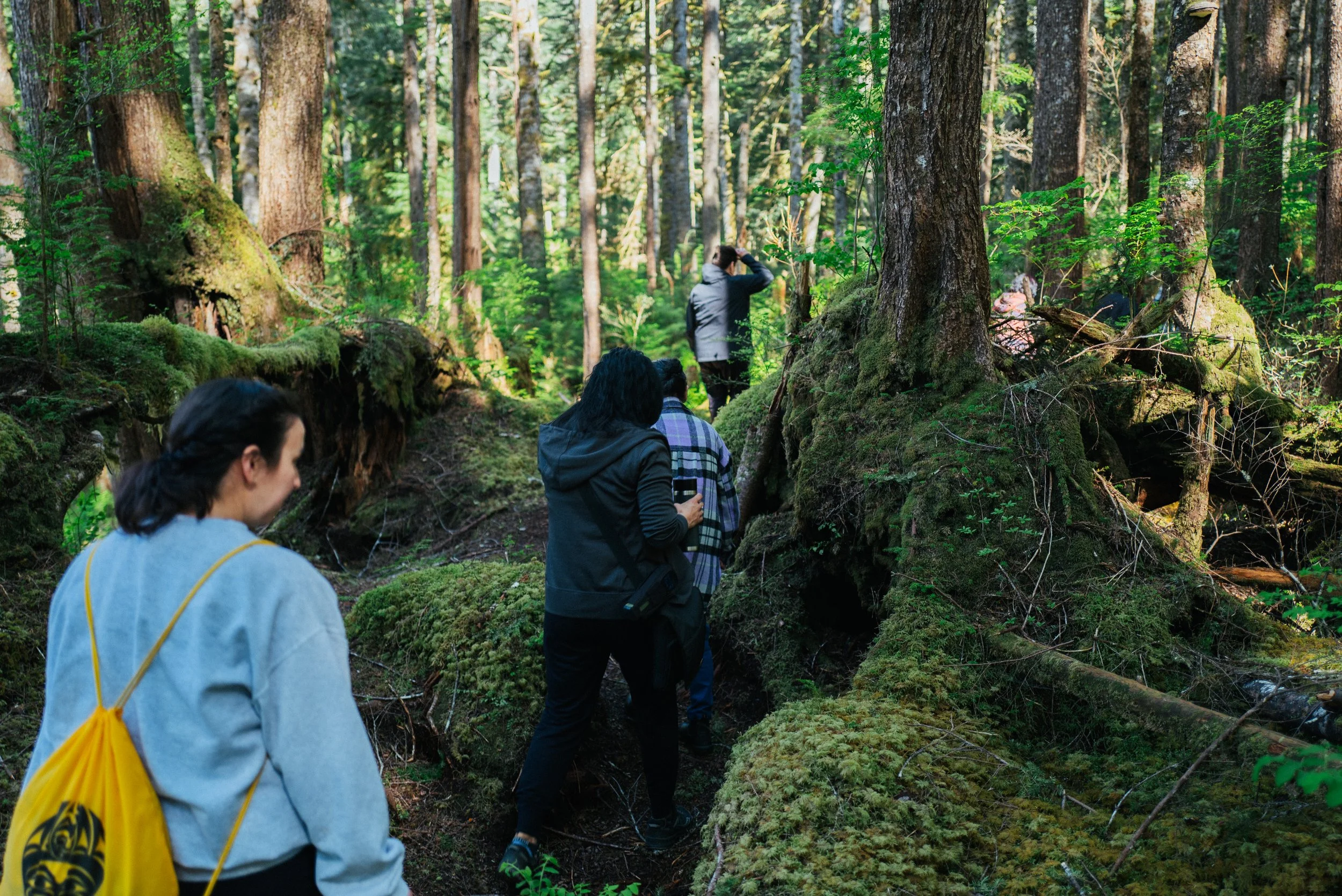
Land-based practices such as walking to the waterfall, visiting old-growth forests, medicine teachings, and river cleansing
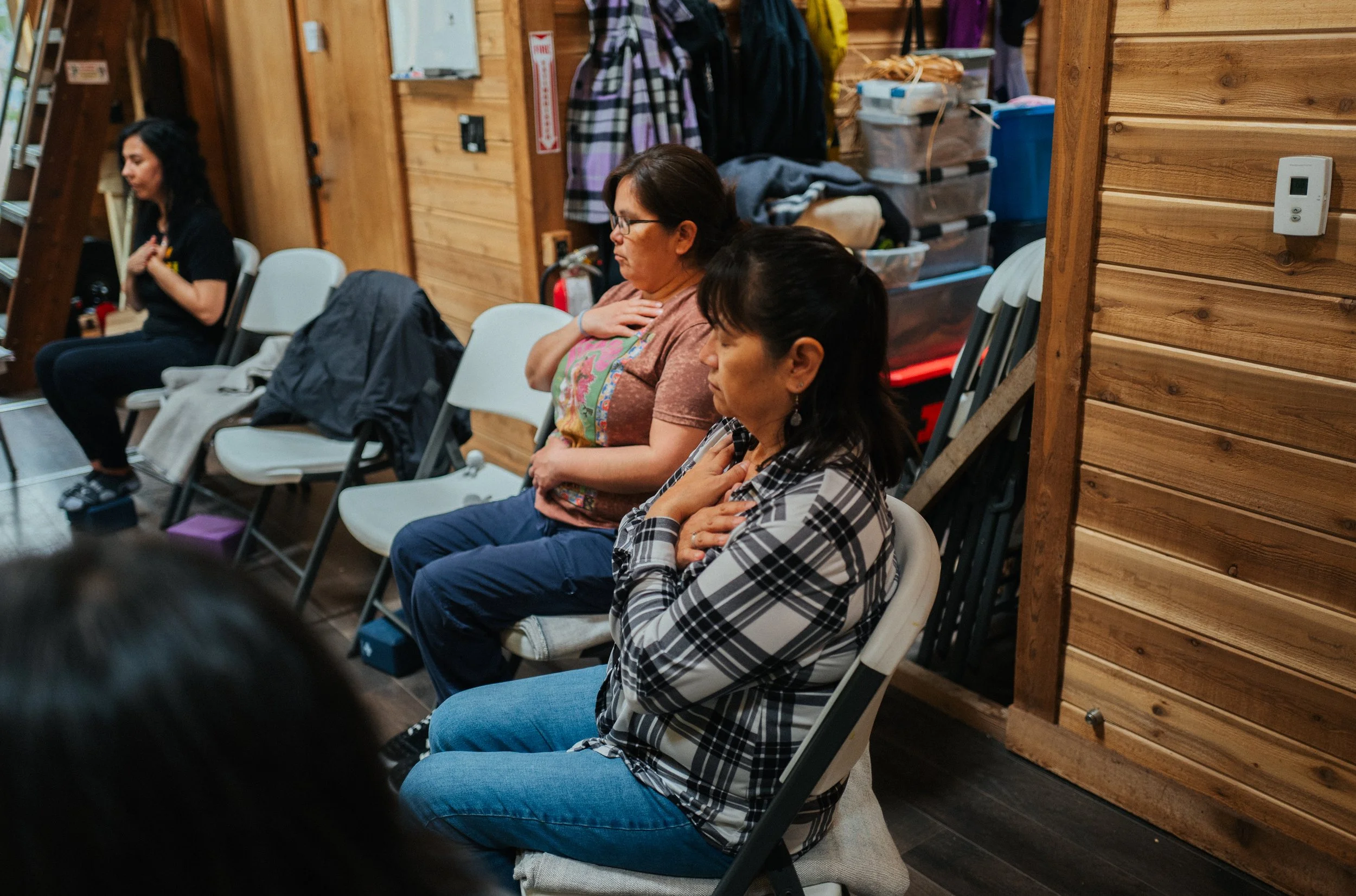
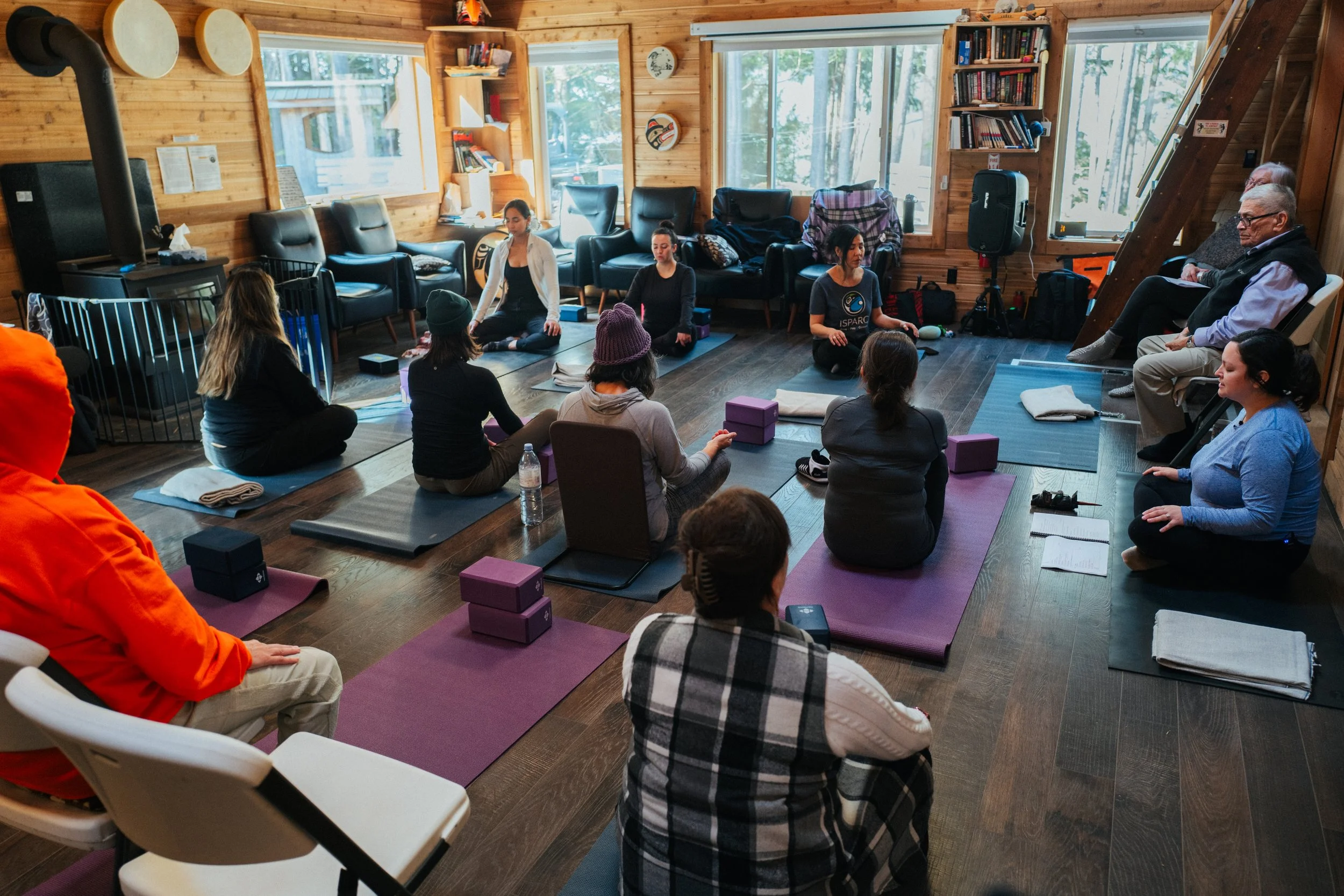
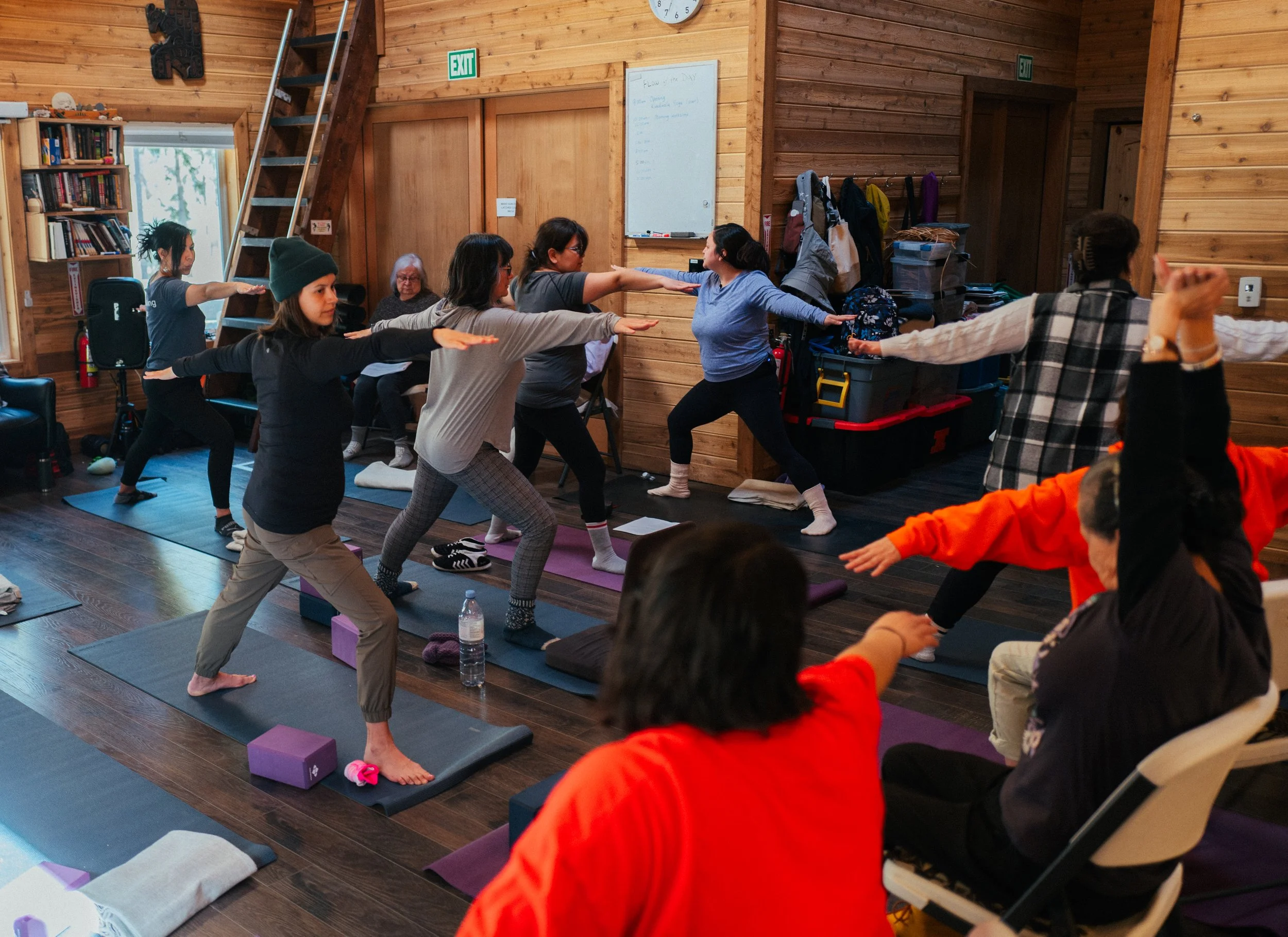
Somatic and contemplative practices, including Kwak̓wala-informed yoga, breathwork, meditation, drumming, dancing, and visualization
Circle dialogue and storytelling, where caregivers could speak openly about burnout, grief, and responsibility
Ceremony and cultural teachings led by elders and knowledge keepers
Participants described the camp as a place where they could finally exhale, cry, laugh, and feel proud to be bak̓wa̱m again—grounded in their lands, language, and ancestors.
Guided by Elders, Knowledge Keepers, and Wellness Leaders
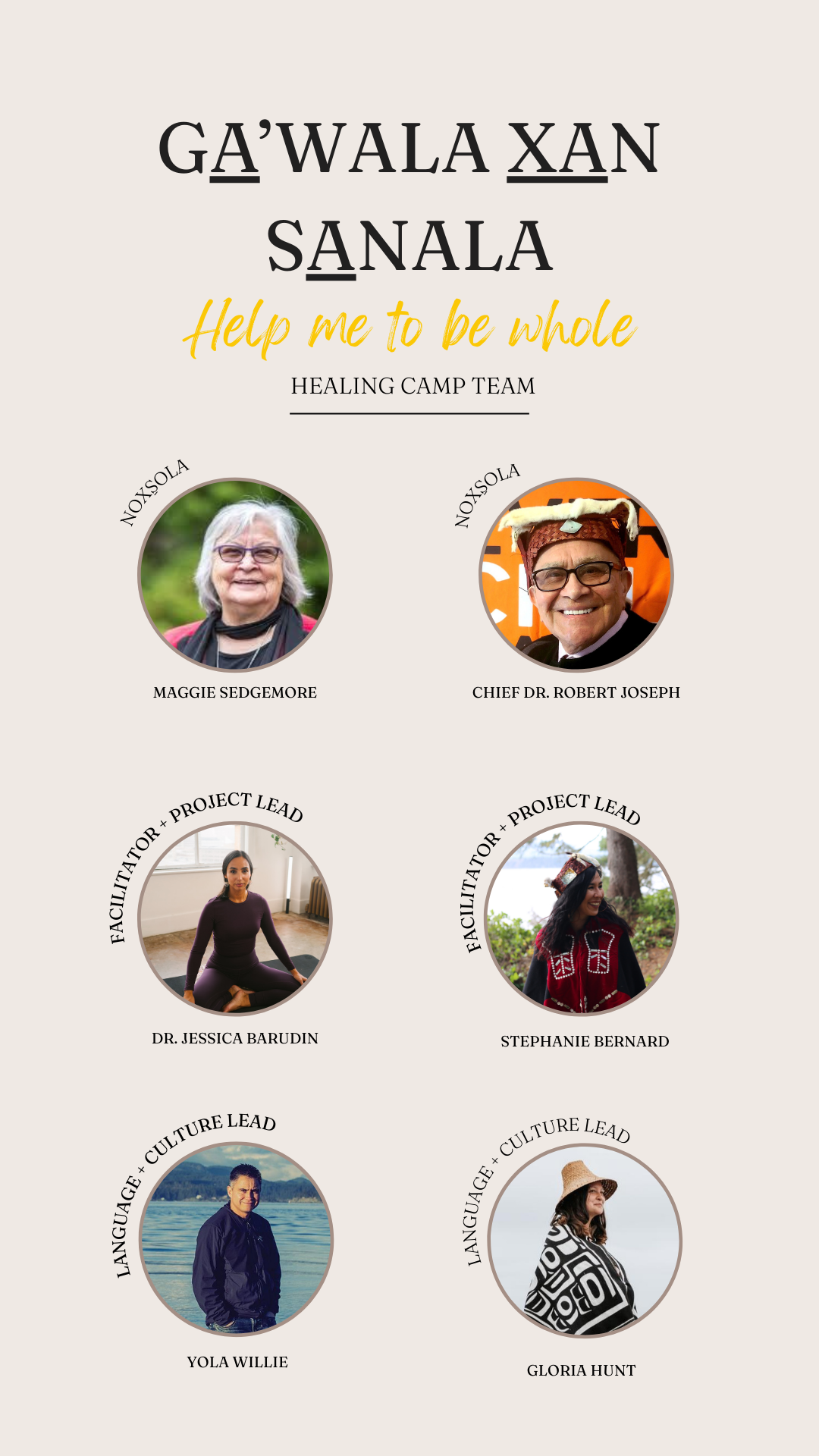
This initiative is held up by the wisdom and leadership of many Kwakwaka’wakw and First Nations leaders, including:
Kwa̱nkwa̱nxwa̱ligedzi Wakas Chief Dr. Robert Joseph
G̱a̱'ax̱stalas Elder Maggie Sedgemore
K’odi Nelson
Stephanie Bernard
Ruby Isaac
A circle of Kwakwaka’wakw wellness leaders, cultural support providers, and collaborators
As a Kwakwaka’wakw scholar, wellness practitioner, and community planner, I (Jessica) co-developed and facilitated the camp in partnership with Nawalakw, while also holding space as a learner, relative, and researcher.
Film as Storytelling, Not Centerpiece
Alongside the camp, we created a short documentary:
Ga’walap̓a laxa̱n’s ḵa̱n’s sa̱nale’: Help Us to Be Whole Healing Program
Filmed in collaboration with my dear friend and cinematographer Cody Preston, the film:
Follows participants as they move through land-based and somatic practices, ceremony, and circle work
Uplifts the voices of frontline workers and knowledge keepers
Serves as a catalyst for storytelling, conversation, and continued community-building
The film is not the main event; it is a relational tool that accompanies the camp model. It helps us share what is possible when frontline workers have dedicated, culturally grounded space to heal, and invites other communities, partners, and supporters into the conversation.
Community-Based Research and Knowledge Sharing
Ga’walap̓a laxa̱n’s ḵa̱n’s sa̱nale’: Help Us to Be Whole Healing Program is also evolving into community-based research, grounded in Indigenous methodologies and narrative inquiry. Together with Stephanie Bernard, the Nawalakw team, and community partners, we are:
Identifying themes from participant interviews and stories to identify barriers and facilitators in caregiver healing
Documenting how language, land, ceremony, and somatic practices work together to support wellness
Developing training resources, facilitator guides, and Kwak̓wala language recordings to support future camps and wellness programming
Preparing community-focused publications and academic articles to share these learnings in ways that remain accountable to our people and territories
This work is about building a model that is both deeply place-based and adaptable - something other Indigenous communities can draw from and make their own.
What’s Next: Women’s Trauma Healing Camp 2026
Building on the teachings of the pilot camp, we are:
Continuing community-based research and engagement with frontline workers and partner organizations
Launching a second women’s trauma healing camp in Hada, June 23–26, 2026, focused on supporting Indigenous women and femme-identifying caregivers through land-based, language-forward, and somatic practices
More details about registration, community partnerships, and sponsorship opportunities will be shared through my community channels and direct outreach.
How to Get Involved
This initiative may be of interest if you are:
A First Nations community or organization interested in land-based healing for your frontline workers
A wellness provider seeking culturally rooted spaces for your own healing
A funder, ally, or institution wanting to support Indigenous-led wellness and language initiatives
To learn more about Ga̱'wala x̱a̱n Sa̱nala, upcoming camps, or potential collaborations, please visit my website at jessicabarudin.com and use the contact form there to connect.
Project Leads:
Led by Kwakwa̱ka̱’wakw women wellness practitioners, Jessica Barudin and Stephanie Bernard, have worked and learned together since 2020 in various capacities through community-based wellness initiatives - including the First Nations Women’s Yoga Initiative. Additionally, they work together on the development of the Indigenous Yoga Collective, a grassroots movement to promote cultural revitalization and embodiment through ceremony, yoga, and breathwork. Jessica and Stephanie have also collaborated on enhancing service delivery at the North Island Building Blocks, collaborations with the Maternal Child and Family Health team, the First Nations Health Authority, and the First Nations Primary Care Initiative for Kwakwa̱ka̱’wakw Nations.
Lastusa̱las Jessica Barudin, PhD, Community Wellness Specialist, Consultant
‘Maxwaks Stephanie Bernard - Community Wellness Provider, Director of Building Blocks
Project Collaborators & Wellness Leaders:
Kwa̱nkwa̱nxwa̱ligedzi Wakas Chief Dr. Robert Joseph - Fluent language speaker, Hereditary Chief of the Gwawaenuk First Nation, Orator
G̱a̱'ax̱stalas Elder Maggie Sedgemore - Clinical Counsellor, Knowledge Keeper
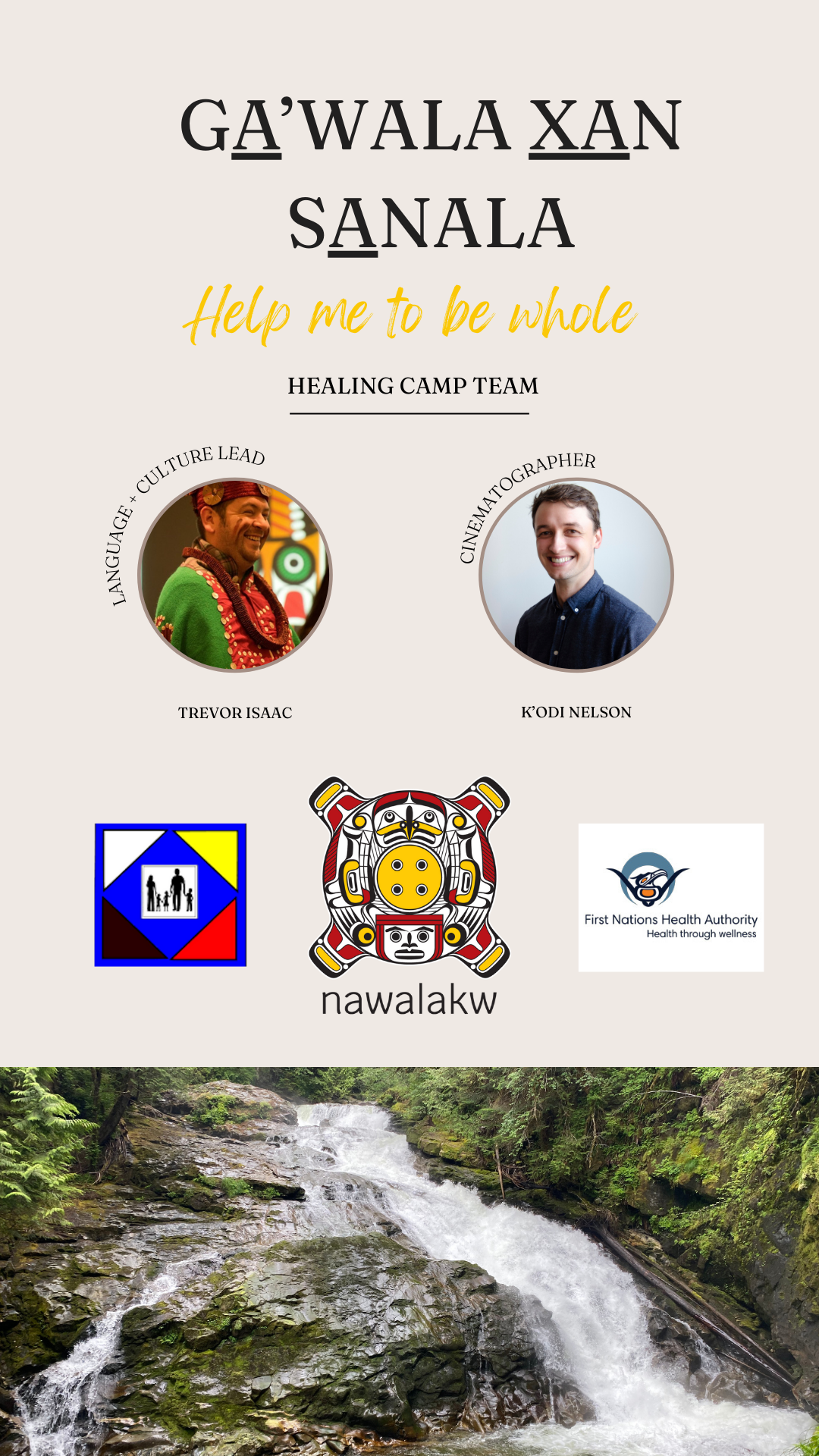
K’odi Nelson - Nawalakw Executive Director, Knowledge Keeper
Dza̱mdzasila̱'og̱wa Gloria Hunt - Nawalakw Language Program Supervisor
Trevor Isaac - Culture and Language support
Cody Preston - Cinematographer, Cody Preston Films
Partnerships: